TFF: Automation Without Governance Is Chaos
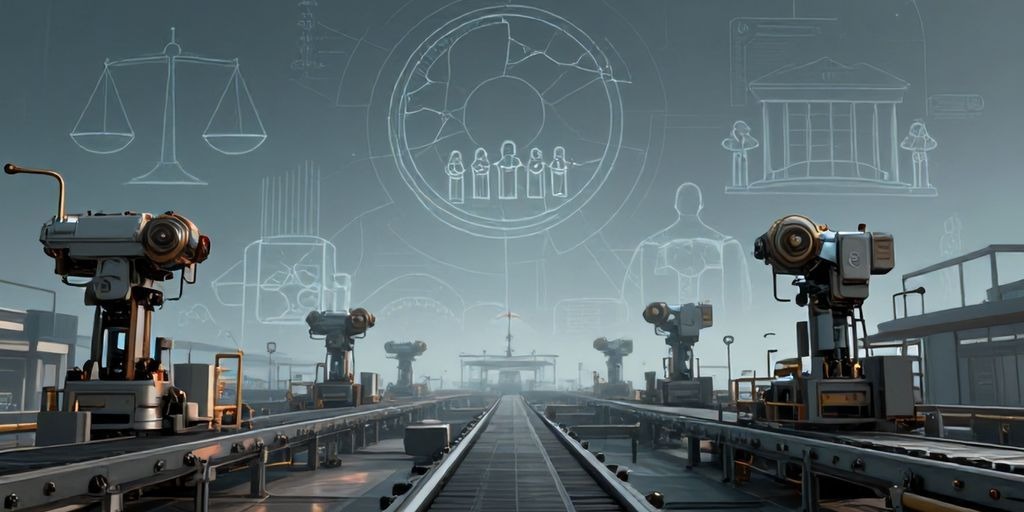
“You automated the factory.
Great. But who decides who it serves?”
Automation is inevitable.
That’s not the debate anymore.
We now have:
AI that writes and paints
Robots that farm and clean
Logistics run by code
Smart contracts that manage finance
We’ve built the tools to unchain humanity from labor.
And yet—freedom hasn’t arrived.
Because automation without governance doesn’t liberate.
It simply shifts the power imbalance from CEOs…
to coders, protocol designers, and data owners.
“Automation doesn’t free us until we decide—together—what it’s for.”
 The False Assumption of Neutral Technology
The failed futures believed:
That if we just automated enough, fairness would emerge
That AI or sensors or algorithms would allocate without bias
That complexity would somehow birth consensus
But technology isn’t neutral.
It reflects:
The values of its builders
The incentives of its funders
The design of its defaults
“If you don’t design governance into automation,
automation becomes governance—without consent.”
History’s Pattern: Tech Without Accountability = Tyranny
Factories increased productivity → but concentrated power
Computers reduced labor → but birthed surveillance
Social media enabled speech → but gamified attention
Crypto automated trust → but invited whales and front-runners
Every time we build new tech without explicit participatory governance, we repeat the same mistake:
Efficiency replaces freedom.
What Governance Must Look Like Now
True post-scarcity governance must be:
Opt-in, not assumed or enforced
Transparent, with every protocol auditable
Weighted by contribution and impact
Local-first yet globally linkable
Resistant to capture or dominance
Human-centered, not just code-secured
And it must operate in rhythm, not perpetual motion.
“Without rhythm, governance becomes reaction.
Without culture, it becomes code.
Without soul, it becomes the machine again.”
What Aethernet Automates—and What It Doesn’t
Energy production → automated generation, human allocation through local consensus.
Food distribution → automated logistics, governed by local nodes.
Financial flows → automated settlements, guided by impact-weighted protocols.
Identity and access → cryptographically verified (ZK-proofs), community-attested.
Governance → automation supports, but never replaces, participant-driven decision-making.
Culture, Myth, and Meaning → never automated; they remain the living core of the system.
“The goal isn’t full automation.
It’s frictionless participation.”
Aethernet automates to remove drudgery—
not to erase agency.
Closing Thought
Technology can:
Grow our food
Print our homes
Manage our grids
Protect our privacy
But only we can decide:
What we value
What we incentivize
What we honor
And how we live
“Automation is power.
Governance is how we make it human.”