TFF: Marx, Venus, and the DAO Dilemma
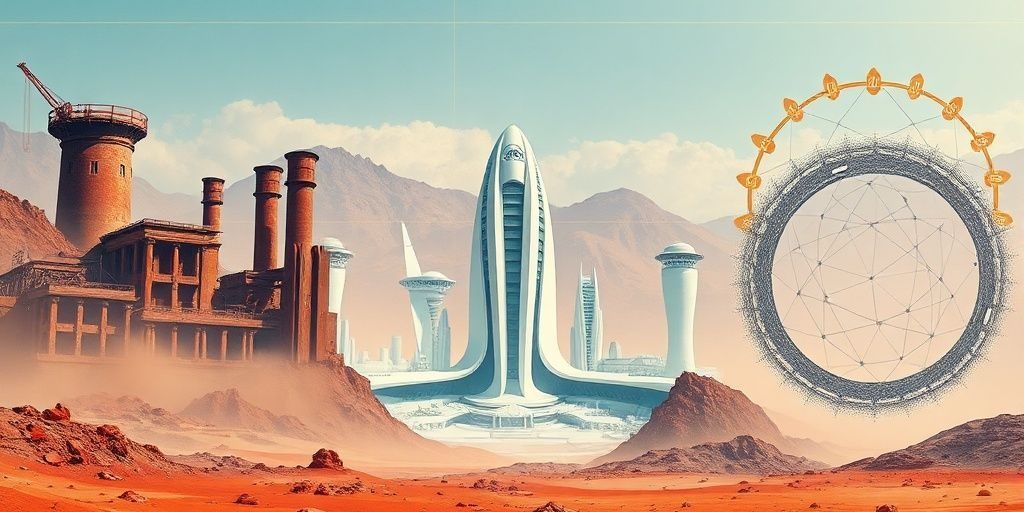
“They saw the machine.
They raged at it.
But they never built the exit.”
Let’s give them their due.
Marx saw the deep violence of industrial capitalism.
Jacque Fresco’s Venus Project envisioned cities of science and sustainability.
The DAO movement tried to rebuild governance from the code up.
All of them wanted the same thing:
A world without coercion.
A world without hierarchy.
A world where wealth didn’t mean power,
and survival wasn’t sold.
But none of them made it.
 Marx: The Right Rage, the Wrong Model
Karl Marx correctly diagnosed:
The alienation of labor
The concentration of wealth
The power imbalance between capital and the worker
But his solution—central planning by the proletariat—never scaled without:
Authoritarian enforcement
Resource rationing
Human-behavior suppression
There was no mechanism for:
Local autonomy
Rhythmic life cycles
Voluntary opt-outs
Innovation without punishment
Marx saw the cage—but replaced it with a bigger, red-painted one.
The Venus Project: Visionary, but Impractical
Jacque Fresco imagined a resource-based economy:
Circular cities
AI-managed distribution
Needs-based abundance
Technological harmony with nature
But it failed to solve:
The “need vs want” dilemma
Global onboarding or a true transitional path
The problem of governance—who tweaks the algorithm?
The cultural layer: no myth, no meaning, no rhythm
It was beautiful. But it was sterile.
A utopia without culture is just a lab.
The DAO Movement: Decentralized in Name, Not in Power
Web3 DAOs promised:
Flat structures
Smart-contract governance
Collective decision-making
Tokenized incentives
But most:
Centralized quickly under founders
Failed at scaling participation
Turned into public-voting surveillance games
Were gamed by whales or apathetic voters
DAOs had tools—but not wisdom.
A governance tool is not a governance culture.
The Core Flaw: No Rhythm, No Sovereignty
All three models made critical errors:
No protection of rhythm → time became extractive again
No local sovereignty → systems defaulted to central control
No real privacy → either panoptic tech or public voting
No incentives for joy → labor was still labor, even if shared
No land-based regeneration → infrastructure abstracted from Earth
They tried to solve the math of society—
but not its soul.
Where Aethernet Begins
Aethernet builds where they broke.
It keeps what was luminous in each vision and discards what enslaved it.
From Marx: the moral clarity about exploitation, but with voluntary coordination instead of control.
From Venus: the dream of technological harmony, but grounded in ecology and culture.
From DAOs: the architecture of participation, but animated by rhythm, privacy, and human resonance.
Where they relied on structure, Aethernet relies on sovereign flow.
Where they demanded obedience, Aethernet invites coherence.
Where they designed governance, Aethernet grows it.
The Contrast in Simple Terms
Voluntary Governance — absent in Marx and Venus, partial in DAOs; in Aethernet, it’s native.
Incentivized Creativity — ignored by Marx and Venus, transactional in DAOs; in Aethernet, it’s the heartbeat of value.
Local Sovereignty — impossible in planned systems, fragile in DAOs; in Aethernet, it’s foundational.
Cultural Design — missing in all three; Aethernet encodes myth, ritual, and regeneration.
Privacy and Anonymity — feared or forgotten; Aethernet defends it cryptographically and ethically.
Transitional Viability — unaddressed before; Aethernet scales fractally, from one human to one node to one civilization.
Regenerative Systems — mechanistic in Venus, absent elsewhere; in Aethernet, they are the substrate of abundance.
They showed us what was missing.
Aethernet builds what they dreamed—
with the parts that work, and none of what doesn’t.
“Marx gave us rage.
Venus gave us vision.
DAOs gave us tools.
Aethernet gives us rhythm.”