TI: Decentralized Cities
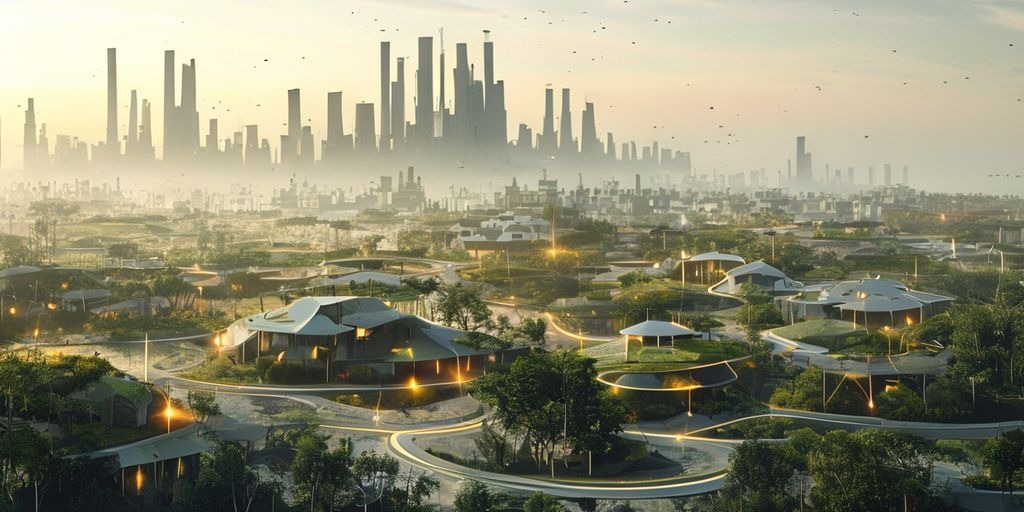
“You don’t reform Babylon. You leave it—and build something sovereign.”
Cities weren’t always like this.
Once, they were sanctuaries. Communal hearths. Living ecosystems that grew with the land, not over it.
But today’s cities are extraction engines:
Rent spirals while housing sits empty.
Food is imported from hundreds of miles away.
Energy flows one way—from corporate to consumer.
You are tracked, taxed, exhausted, and disconnected.
The city of the future doesn’t upgrade this model.
It replaces it—with something decentralized, regenerative, and free.
 What Is a Decentralized City?
A decentralized city isn’t a place.
It’s a network of sovereign nodes—modular communities, each self-sustaining, interoperable, and opt-in.
Think:
10 to 200-person Grid Cells, each producing their own food, energy, and culture
Connected via open protocols, not central governments
Governed by consent, contribution, and shared values, not imposed laws
Linked by digital Aethernet infrastructure and physical trade routes
No hierarchy.
No surveillance.
No rent.
No permission required.
Just aligned cells—growing a civilization like mycelium.
The Tech + Earth Fusion
These cities are not “off-grid.” They’re post-grid.
Solar, wind, water, kinetic energy
Mycelium structures, biophilic design
Local hydroponics, vertical gardens, soil-based permaculture
Mesh networks
Encrypted governance, tokenized consensus, ZK-verified participation
Everything feeds the loop.
Nothing is wasted.
Each node upgrades as its people do.
These are not tech compounds.
They are living civilizations, coded in harmony with Earth.
Why This Works Now (And Never Did Before)
Attempts at intentional community always failed because:
No sustainable economic model
No governance without hierarchy
No scalability beyond idealism
No privacy or sovereignty tech to protect from the state
But now, we have:
Energy autonomy
Tokenized, post-scarcity economies
Decentralized identity + ZK-based coordination
Modular governance
Secure communication
Economic defensibility
For the first time in history, decentralized cities are not just possible.
They’re inevitable.
The Real Exit
This isn’t secession.
It’s succession.
A peaceful migration from a dying system to a living one.
You don’t vote your way out of this world.
You don’t protest your way into the next.
You build your way forward.
With others who’ve remembered the same truth.
“You can’t fix the city from within. But you can plant a new one—and let it grow beneath the old until the concrete cracks.”